


editor’s note
We went quiet for a few months because we were busy building something.
There’s a pull that certain places have. The ones that haven’t been properly discovered yet, that exist just outside the frame of what most people are looking at. Those are the places that call us.
Idaho is one of them. It sits at a threshold; where the desert stops and the Rockies begin. Where classic old-school Americana, proper ranches, horses, open plains, meets the first pine forests climbing into the mountains, transitioning slowly into something that starts to feel like the Pacific Northwest. It’s a place caught between two worlds, and there’s something about that in-between quality that makes it quietly extraordinary.
We were in McCall, Idaho, in the mountains, surrounded by timber and stone and a very specific set of convictions about how people should gather. And now it’s ready.
It brought us back here with a lot to say.
Welcome back to the planet.
the good life is built, not found.
We’ve been sold the idea that the good life is something you discover. You find the right place, book it, experience it, and move on to the next one. The algorithm is very good at feeding this. So are we, honestly. Beautiful spaces are what we do.
But there’s a different kind of place that we’ve been thinking about. One that doesn’t work the same way.
It’s the house your grandparents owned that smelled the same every time you walked in. The cabin your family returned to every summer until it became the backdrop for everything; the fights, the meals, the traditions you didn’t realize were forming. The place that, when you picture it now, you feel something the algorithm can’t replicate: rootedness.
These places all have something in common. They weren’t optimized for discovery. They were built (or chosen, or inherited) for return.
Solarpunk, at its core, is about imagining a future that’s worth building toward. Durable things. Designed for people. Architecture that improves with age. Gatherings that become traditions. The radical act of making something that will outlast the moment it was made in.
That’s what we’ve been doing in Idaho.


introducing: the overlook, mccall, idaho
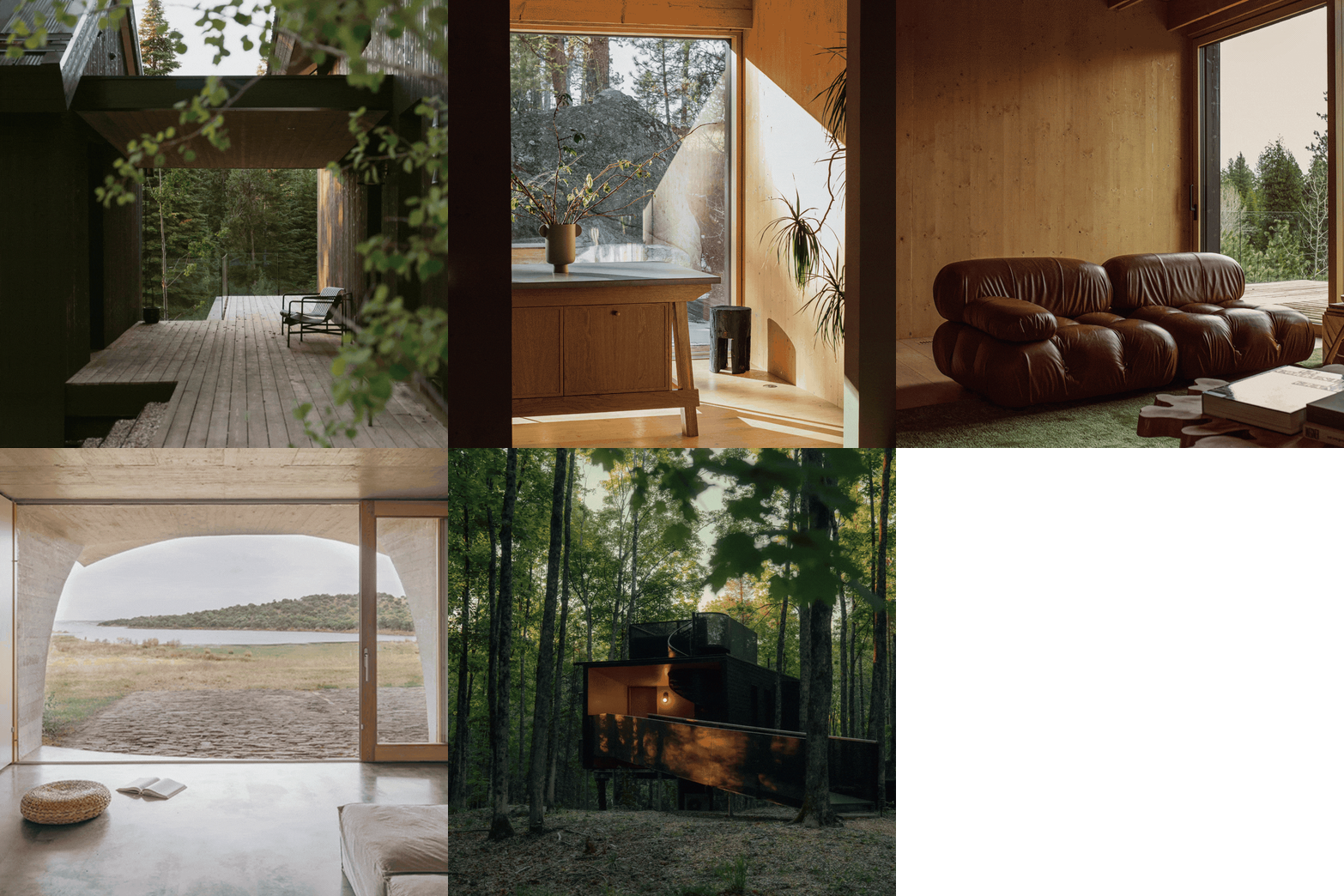
We are bringing a new kind of place to life in the mountains in McCall; a 4-bedroom structure woven into a hillside of Ponderosa pines, designed to bring people together.
Dark timber cladding, plain-sawn oak cabinetry, concrete surfaces, a Camaleonda sofa in cognac leather.
The brief our partners at Migration Studios, led by Cj Pennington and Cam Minor, gave themselves was simple: build something that rewards return visits. A place that gets better the second time, because you already know which window has the best light in the morning, and that the fog comes in low over the hills on cold afternoons and it is worth stopping for.
We’re not the only ones building this way.
a maker we’re watching
Café Nice — the coffee shop that took four years and a classic Range Rover
Four years ago, Steve Booker had an idea. And he built it slowly, the only way it could be built. He restored a Range Rover Classic — fully, obsessively, down to every last detail — and turned it into a one-of-a-kind mobile coffee experience that has since taken on a life of its own.
Café Nice has been four years in the making. What started as an idea became a full vehicle restoration, which became a brand, which became a community. The Range Rover itself is the thesis. A machine built for going to difficult places and coming back. Booker took that spirit and asked: what if we used it to serve exceptional coffee in beautiful ones?
The build, as they describe it, became a metaphor: stripping things back, refining, rebuilding, and caring deeply about every element. That’s not how most people start a coffee business. It’s how you build something that lasts.
He’s now popping up across the UK, the Rover turning heads everywhere it parks.


A reconstructed Range Rover, a hillside in Idaho, two fishermen's huts on the Sado River, a vinyl set in Vermont, a book written in 1977 that still hasn't been proven wrong. Same argument, different materials.
what we’re listening to
Every good space deserves a soundtrack. Mike Clay recorded this vinyl set at Shadow Lakehouse in Vermont — hip-hop, jazz, funk, soul. Put it on.
→ Sunday Morning Vinyl at Shadow Lake
what we’re reading
Atmospheres — Peter Zumthor
Seventy pages. Reads in a single sitting. Changes how you see every room you walk into afterward. Zumthor, one of the great living architects, gave a lecture in 2003 about what makes a building feel the way it feels. The quality of light, the sound underfoot, the temperature of the air, the way materials age. He calls it atmosphere, and once he names it you can’t stop noticing it. Essential reading before any trip, any renovation, any stay. Essential reading for anyone who has ever walked into a room and felt, without knowing why, that they wanted to stay.
A Pattern Language — Christopher Alexander
Published in 1977 and still quietly radical. Alexander’s argument is that good spaces — towns, buildings, rooms — follow patterns that human beings have always known instinctively, and that we’ve been systematically ignoring them in the name of efficiency and novelty. It reads like a manifesto for everything hinter believes about space. Start with pattern 127: Intimacy Gradient.
where to go this summer and fall
Summer, and fall, is for going somewhere that earns a return visit. The place you’ll still be thinking about next year. Here are four we’d book without hesitation, all bookable on ddriftt, a booking platform for design-led, architecture-forward properties that you won't find on the usual channels.
Santa Clara 1728 — Lisbon, Portugal
An 18th-century building on one of Lisbon’s oldest squares, restored by architect Manuel Aires Mateus. Generous windows frame the Tagus River below. Old paintings on white walls. A hidden garden. Six bedrooms for up to 16 guests.
Bonus: If you’re planning a trip to Lisbon, here’s a curated design and food focused guide. The city, and its surroundings, is full of little secrets, beautifully designed spaces and incredible food. Perfect spots to take it all in. Plus, some secret beaches, art galleries, shops, and more. A curation by Emily from hinter.
Cabanas no Rio — Comporta, Portugal
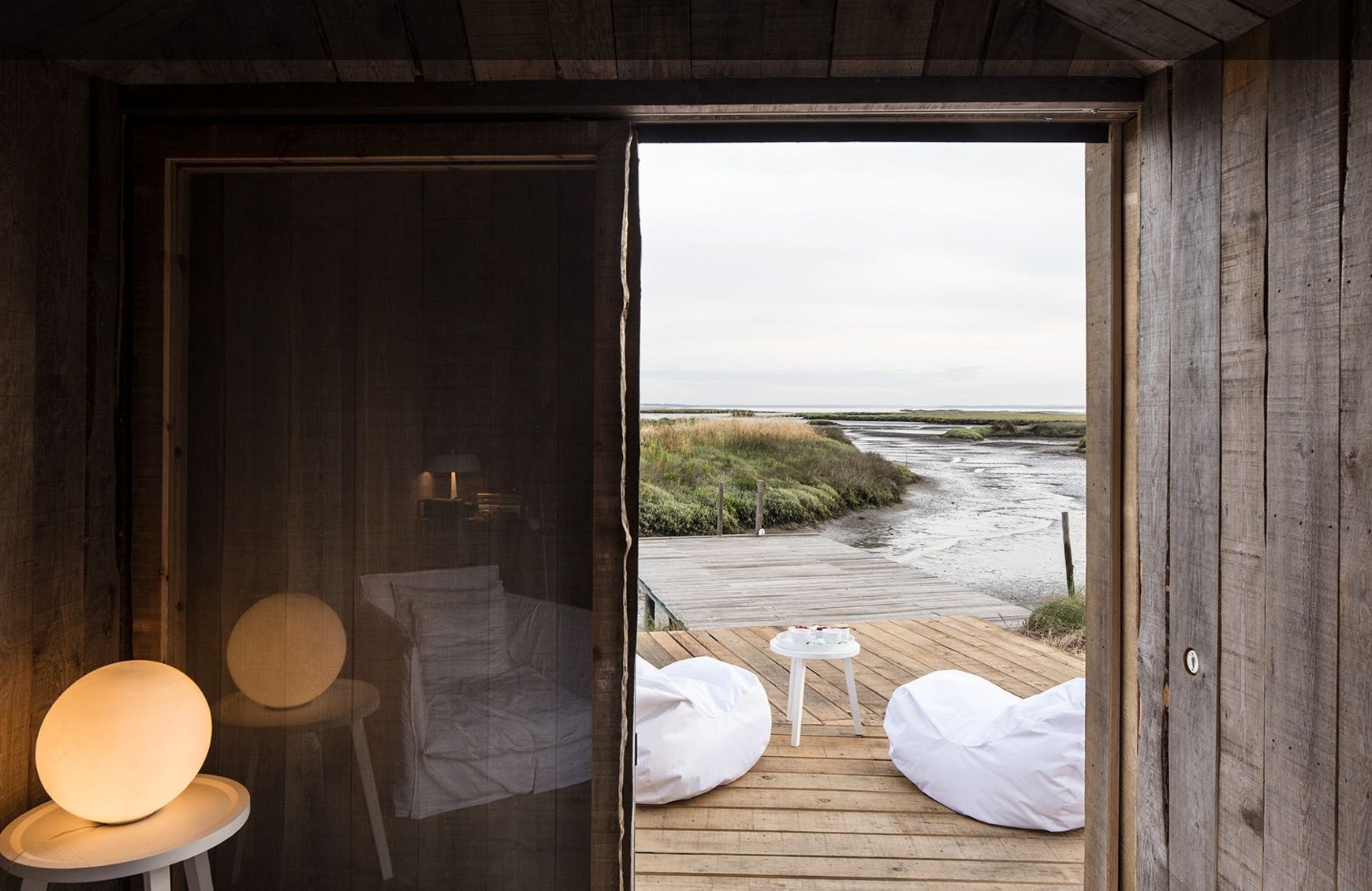
Two old fishermen’s huts on the Sado River, restored by the same architect — Aires Mateus, using a single material throughout: recycled timber. Floors, walls, ceiling, fittings, all exposed wood, built to disappear into the landscape.
Fattoria Valtellina — Chianti, Italy
A four-bedroom farmhouse in the rolling hills of Chianti, owned by the same family for generations and thoughtfully restored by Domenico Minchilli Design of Rome. Vineyard views, a pool under the pines, daily housekeeping. The kind of place that operates on Italian summer time — slow lunches, long evenings, nowhere particular to be.
Hårtwood by Fort Treehouse Co. — Minden, Ontario
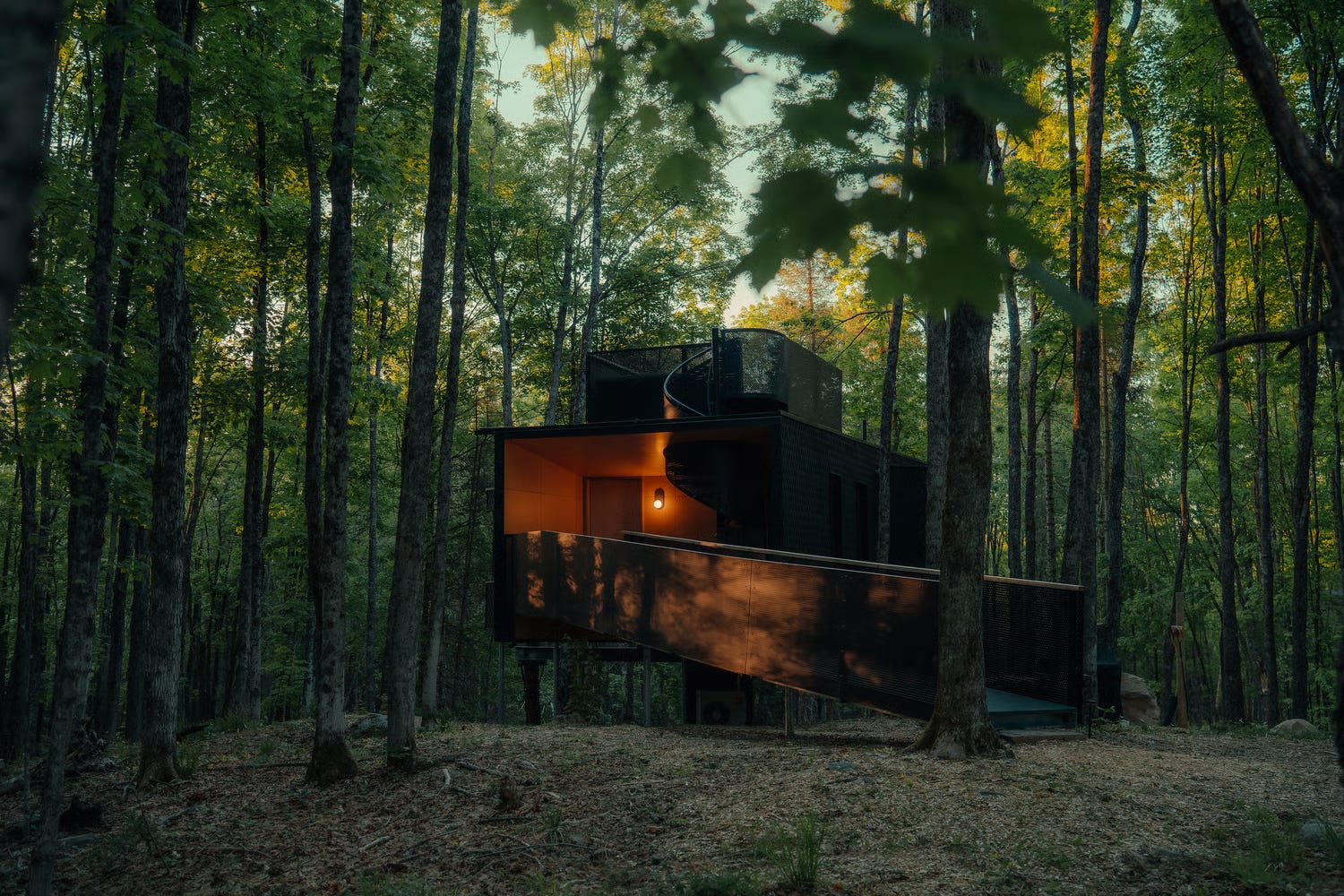
Bordering a protected 500-acre nature reserve, Hårtwood is Fort’s most ambitious project to date, a landscape-led, off-grid treehouse hotel designed to slow people down. With three private treehouses and the Hydda, a communal space centered around a wine and cocktail bar, provisions, and forest-inspired goods, Hårtwood sits outside traditional hospitality categories. The architecture sets the rhythm, encouraging slower movement, deeper rest, and more intentional gathering.
→ Book
your turn
We’re curious about something.
Tell us about a place you return to.
A corner booth in a restaurant that’s been there forty years. A trail you’ve walked so many times it knows you back. A grandmother’s kitchen. Drop it in the comments.
The future is bright. ⍋
Want to find us in other galaxies?
Interested in being one of our Artists in Residence? Apply here.
so so so great, thank you for this, this morning ☺️